Sarah Jane Palmer
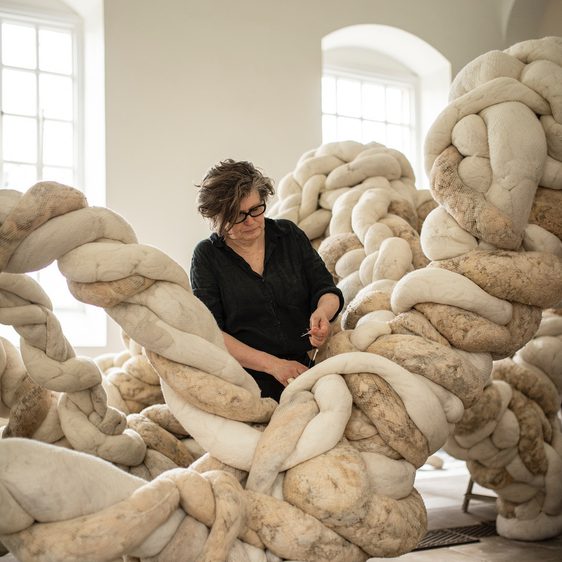
Sarah Jane Palmer is a Sheffield-based multidisciplinary artist and educator whose practice spans installation, inflatable sculpture, painting, animation, film and printmaking. Drawn to the edges of perception, she works with ideas around visual hallucinations, dreams, geometry, pattern and historical archives — creating work that invites an unexpected shift in how we see.
Sarah's practice is rooted in making the invisible visible — exploring the threshold between what is seen and unseen, known and unknown. Working in a collaborative and research-led way, she draws on partnerships with scientists, communities and institutions to investigate ideas around visual perception, sight loss and the ways in which the mind constructs and deceives the eye. Her work often emerges through long-term enquiry, taking unexpected forms across a range of materials and media.
In 2004 Sarah graduated with a BA (Hons) in Fine Art, and in 2013 received an MA in Fine Art with distinction. Alongside her studio practice she works extensively as an artist educator and creative learning facilitator, collaborating with galleries, schools and community organisations across the north of England.
You may also like
- Art Outdoors

Roger Hiorns: Seizure
In 2008 Roger Hiorns transformed an empty council flat in Southwark, London into Seizure, a sparkling blue world of copper sulphate crystals. The work was created using 75,000 litres of liquid copper sulphate, which was pumped into the former dwelling to create a strangely beautiful and somewhat menacing crystalline growth on the walls, floor, ceiling and even the bath of the abandoned flat. - News

Yorkshire Sculpture Park announces 2024 programme celebrating diversity and personal discovery
10 January 2024 - Profile

Saad Qureshi
- Art Outdoors

JocJonJosch: Eddy
Eddy continues JocJonJosch’s investigations into collaboration. The round boat with three oars is symbolic of the collective’s dynamic, in which Joc, Jonathan and Joschi wrestle towards a destination. There is a sense that each time one would attempt to move forward, his movement would be countered by the action of the other two, leaving them literally turning in circles.