Auke de Vries: The Watchtower
Art OutdoorsAuke de Vries: The Watchtower
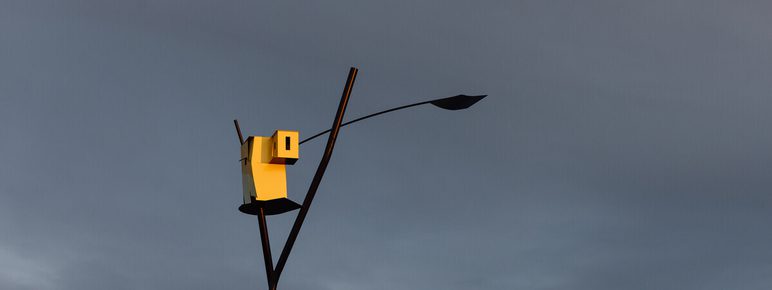
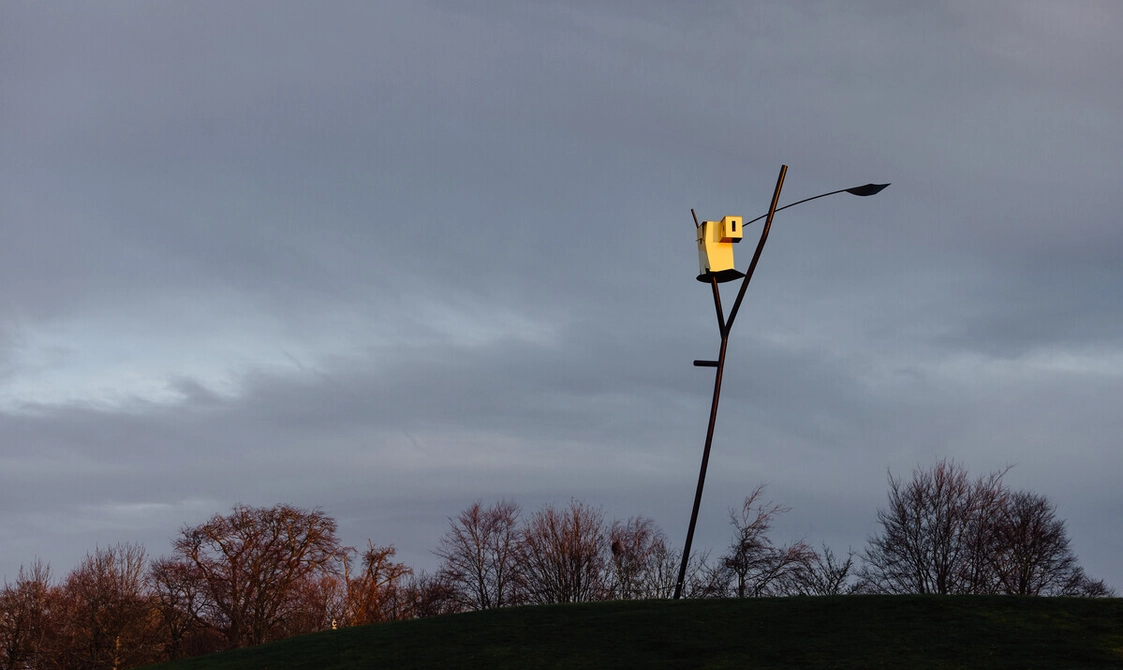
Auke de Vries is one of the best known Dutch sculptors working today. In 2000-2001 YSP presented Living in Trees, an exhibition of de Vries’s work in the Pavilion Gallery and outdoors. In the months leading up to the show he spent time at the Park and was especially drawn to the trees. He carefully watched their shapes and movements in the wind, making sketches to record their mood, lines and gestures. The Watchtower was made as a response to these observations and speaks directly to this place.
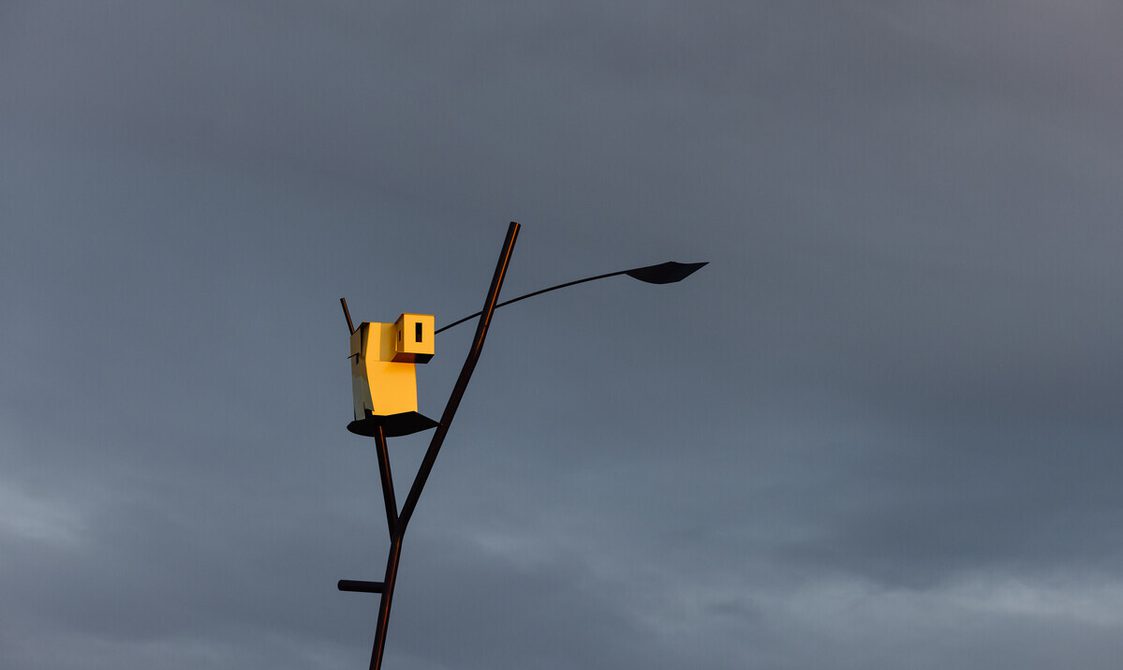
The artist’s childhood in The Hague during World War II sparked his lifelong fascination with watchtowers. Although historically connected to conflict, in de Vries’s interpretation this lookout has a more benevolent and colourful presence. It could be a way to peer across borders, watch, listen and enjoy the view. With its tall stem, the sculpture itself resembles a tree reaching into the sky. At the top a series of boxes form a treehouse-like structure with windows onto the landscape. An intriguing and inaccessible nest-like space, it could be home to birds or an unseen presence that watches us from above.
The artist’s sculptures are typically composed of geometric shapes that appear to float weightlessly in air. He also draws on the flat, open plains of his native Holland, always seeking to connect his artwork to the environment or landscape.
De Vries (b.1937) lives and works in the Netherlands. He studied painting at the Royal Academy of Art in The Hague and was a painter and graphic designer before turning to sculpture in the 1970s. He has exhibited internationally and his work has been commissioned for many public spaces, including in Amsterdam, Rotterdam and Barcelona.
You may also like
- Profile

Vincent James
Artist Educator - Art Outdoors
Joao Vasco Paiva: Standard Kitchen
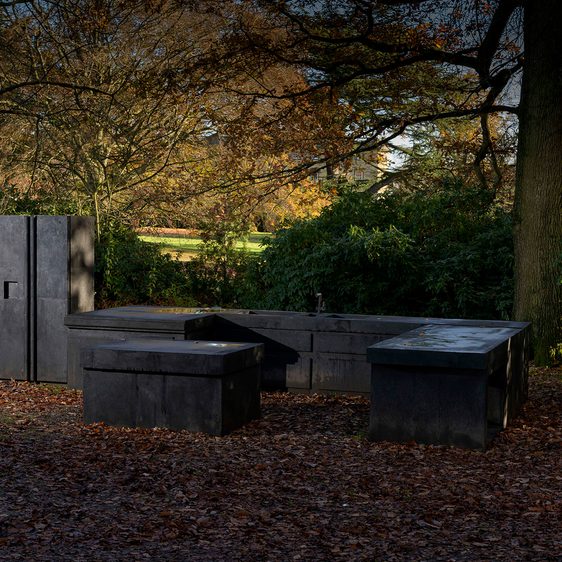
For Standard Kitchen, Vasco Paiva collaborated with artisans in East Bali. Together, they used the traditional method of carving Batu Candi, a lava stone often used for building temples and shrines. The stone was shaped to create a life-sized replica of a modular kitchen to consider the processes and spaces that are integral to everyday life. - Profile

Sam Henney
- Art Outdoors
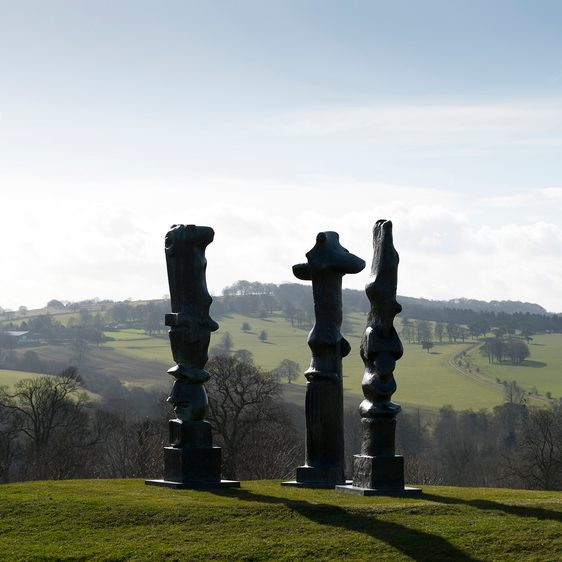
Henry Moore: Upright Motives No. 1 (Glenkiln Cross): No 2; No 7
Moore created twelve Upright Motives in the mid 1950s. In their powerful symbolism these pieces owe much to the tall, upright stones, known as menhirs, from prehistoric times. Moore brought all these influences together to create forms which are unmistakably his own.