Nishat Awan
– Bothy GalleryAbout Nishat Awan
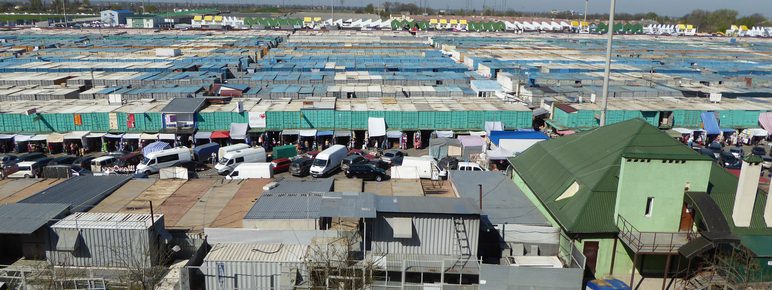
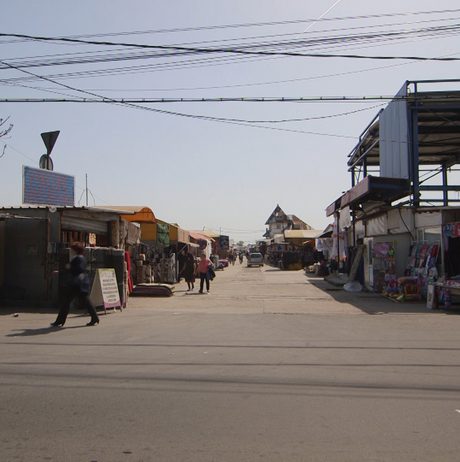
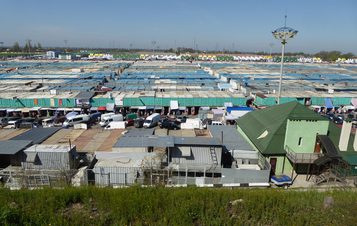
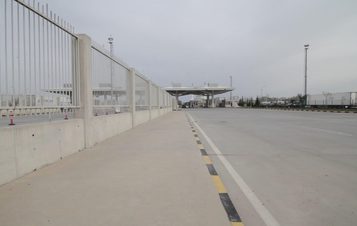
An immersive video installation by artist and academic Nishat Awan in the refurbished Bothy Gallery. Grounded in original field research, Migrant Narratives of Citizenship: A Topological Atlas of European Belonging presented a collection of maps which follow the borders of Europe, particularly along the Black Sea.
The exhibition traced a route through the borderlands of the ‘refugee crisis’ narrating stories of migrant journeys and the clandestine crossing of borders. An unfinished and provisional Atlas of European Belonging visualised Europe through its margins and the spaces of transit, movement and stasis produced by those on the move.
This timely project, developed in collaboration with artist Cressida Kocienski, took as its starting point the historical connection between the way states represent themselves through maps and how citizens and non-citizens are defined. Awan considers maps to be world-making entities traditionally created by those in power, rather than as visualisations of an already existing world.
Awan is a Lecturer in Architecture at the University of Sheffield and worked with her students to construct this installation. The exhibition not only invited visitors to journey through the gallery to experience migrant perspectives on the current crisis in Europe, but also acted as a platform for further discussions between refugees, academics and non-governmental organisation (NGO) representatives that will contribute to Awan’s ongoing research.
Awan’s academic research focuses on the intersection of geo-politics and space, in particular working with the topics of migration, borders and diasporas. She is co-author of Spatial Agency (Routledge, 2011), a book that explores other modes of practicing architecture and her current book Diasporic Agencies (Ashgate, 2016), also explores questions of migration.
Migrant Narratives of Citizenship: A Topological Atlas of European Belonging was supported by the Independent Social Research Foundation, University of Sheffield and ESRC Festival of Social Science.
You might also like
More- News
Land Art with Anna Mazzanti and Dr Helen Pheby
19 December 2022 - News

Tune Into Nature Music Prize reveals 2025 winner
3 March 2025 - News
Major new public sculptures unveiled in Wakefield city centre
20 July 2023 - News
Yorkshire Sculpture Park announces 2024 programme celebrating diversity and personal discovery
10 January 2024