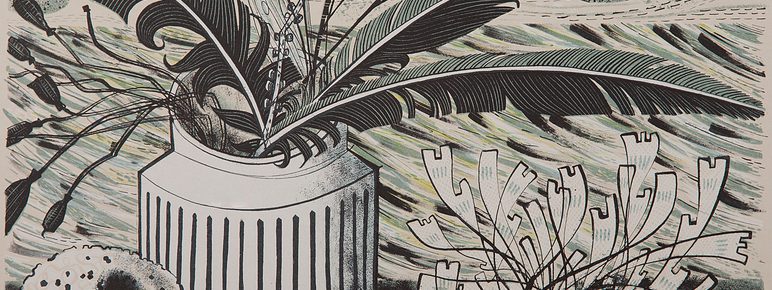
Angie Lewin: A Natural Line
– YSP CentreAbout Angie Lewin: A Natural Line
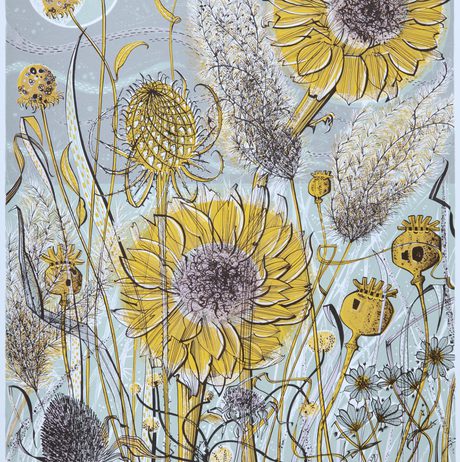
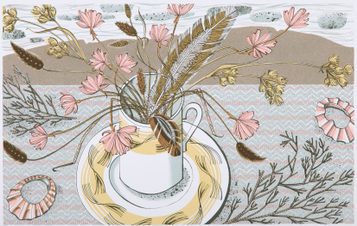
Angie Lewin is celebrated for her striking prints of skeletal plant forms set against the sky. She took inspiration from YSP’s historic, 500-acre landscape to create a series of new prints and watercolours for this solo exhibition, all of which were available to buy.
Inspired by both the cliff tops and salt marshes of the North Norfolk coast and the Scottish Highlands, Lewin’s work depicts these contrasting environments and their native flora in wood engraving, linocut, silkscreen, lithograph, watercolour and collage.
The exhibition in YSP Centre featured Lewin’s paintings and prints, including an exclusive, limited edition, five-colour screen print hand-pulled at Jealous Print studio in London.
Lewin’s work is featured in many public and private collections in the UK and abroad, including The London Institute, Aberystwyth University, Ashmolean Museum and The Victoria & Albert Museum. She has illustrated books for Faber and Faber, Penguin and Merrell, designed fabrics for Liberty’s of London and designs fabrics for St. Jude’s, which she founded and runs with husband Simon.
You may also like
More- Art Outdoors
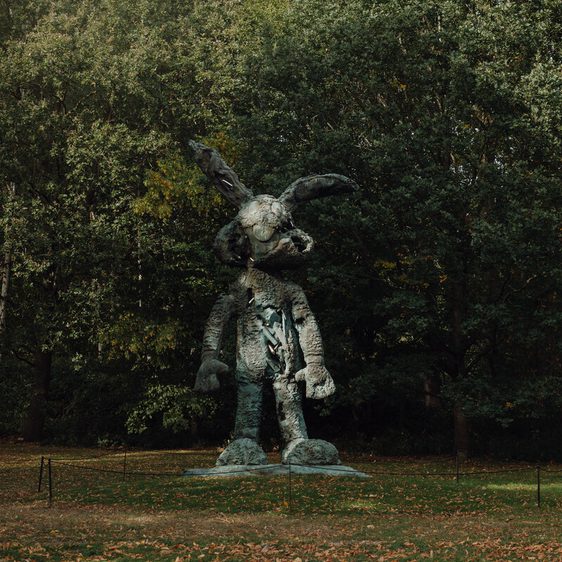
Daniel Arsham: Bronze Eroded Bunny
Arsham transforms familiar objects and images to create a sense of distorted reality and plays with our expectations. Bronze Eroded Bunny is based on a Bugs Bunny plush toy which has been transformed into a future relic. - Art Outdoors

Andy Goldsworthy: Shadow Stone Fold
Andy Goldsworthy consulted with YSP's tenant farmer to design and replace a wooden fold in the Country Park with an artwork which can also be used as a functional sheep fold. - News
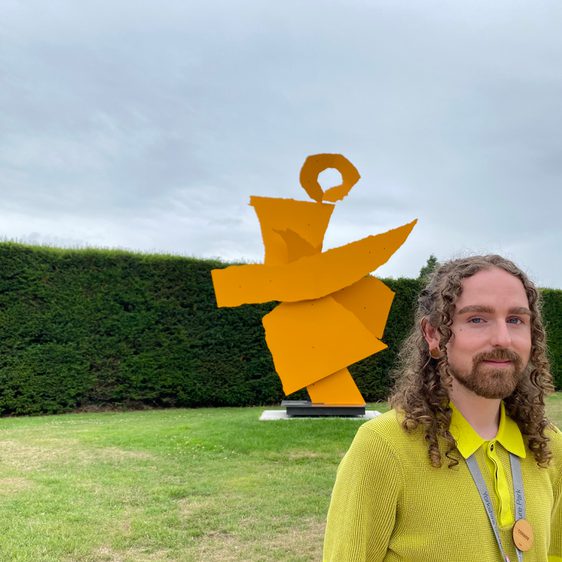
Staff profile: Connor Shields Formal Learning Programme Assistant at YSP
1 August 2025 - Profile

Keisha Thompson
Poet in Residence 2023