Alice Pattullo: Of House and Home
– YSP CentreAbout Alice Pattullo: Of House and Home
A charming show of screen-prints
- Elle Decoration
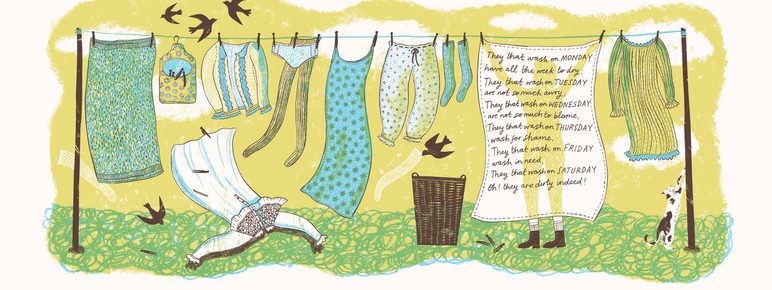
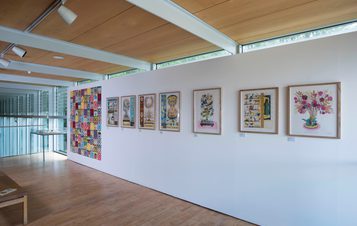
Alice Pattullo takes inspiration from house and home in her most ambitious project to date. The exhibition includes 60 new screen-printed editions, referencing Pattullo’s fascination with superstitions and folklore.
Transporting you into a forgotten era, Of House and Home takes visitors on a journey through a Victorian household from garden to parlour, culminating with the heart of the home – a recreation of a traditional fireplace and mantelpiece. Informed by a love of historical research and the discovery of curious superstitions and rhymes surrounding the domestic every day, Pattullo’s new works introduce the modern day house dweller to parlour pastimes, homemade plant remedies, kitchen folklore and protective talismans.
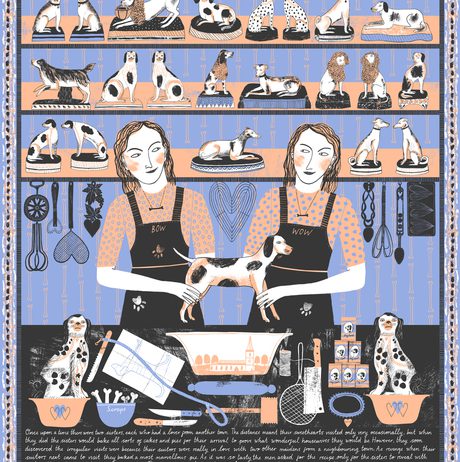
The Household Lore series, a collection of black and white screen-prints, imparts worldly wisdom and old wives’ tales including Elderflower and Hawthorn which claims ‘hawthorn bloom and elderflowers fill the house with evil powers’ and Jug which states that ‘it is bad luck to drink straight from a jug’. The Parlour Pastimes series explores crafts traditionally practiced by Victorian women in the parlour, from shell work to feather work and letter writing to embroidery.
House Quilt, the largest work in the show made up of 100 screen-printed ‘patchwork’ blocks, references traditional American schoolhouse quilts and pays homage to the patchwork quilts made and collected by the artist’s mother when she was growing up. Pattullo’s personal interest in pattern, decoration and detail is evident within her work, which celebrates the beauty of everyday objects.
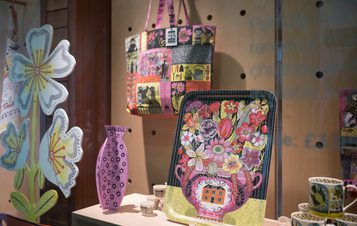
All works in Of House and Home were available to buy, along with a limited edition screen-print which was exclusive to and inspired by YSP. The artist also created an exclusive range of homeware for YSP Shop including an eggcup, biscuit tin and tray.

You might also like
More- Profile

Maria de Peverelli
- Art Outdoors
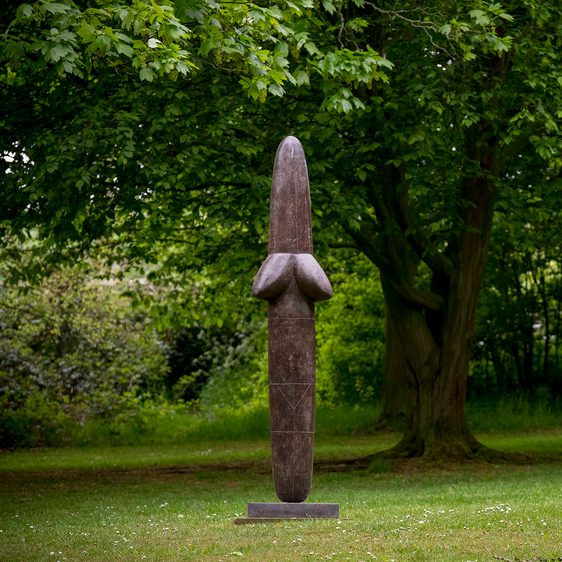
William Turnbull: Large Idol
Large Idol forms part of a series of ‘Idol’ sculptures which William Turnbull made over the course of several years. These minimal works take the human form as a starting point which is then simplified and refined, whilst maintaining a sense of figuration. The titles of these streamlined forms make reference to them perhaps being thought of as ancient gods and being worshipped for their power and beauty. - Art Outdoors

Andy Goldsworthy: Shadow Stone Fold
Andy Goldsworthy consulted with YSP's tenant farmer to design and replace a wooden fold in the Country Park with an artwork which can also be used as a functional sheep fold. - Art Outdoors
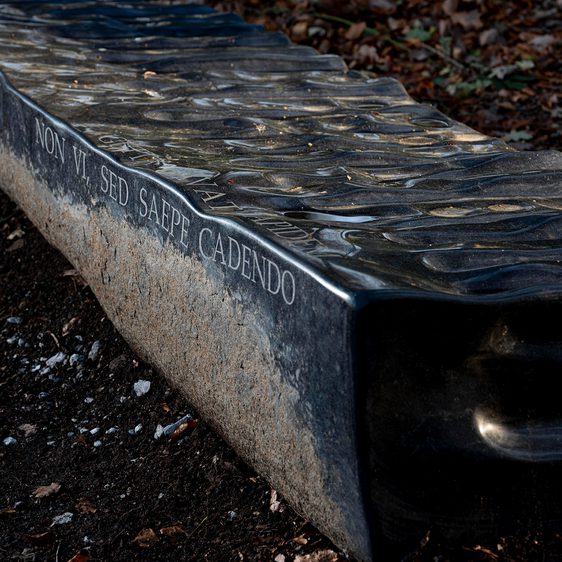
Willem Boshoff: Flagstone
Willem Boshoff’s Flagstone is a sculpture and a seat, positioned here overlooking Upper Lake to provide a space for rest and contemplation. In summer 2018, Boshoff spent a month at YSP, researching and meticulously recording the flora and fauna. Each day he walked the paths around the Park and became particularly fond of the areas around the Lakes. The residency was followed by an exhibition in Upper Space and the subsequent gift of Flagstone as a permanent work for YSP’s landscape.