Damien Hirst: The Martyr – Saint Bartholomew
Art OutdoorsDamien Hirst: The Martyr – Saint Bartholomew
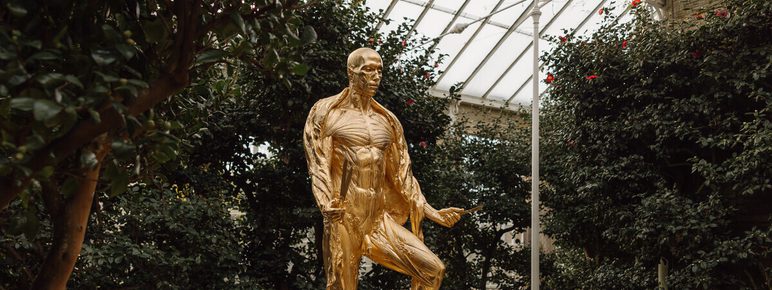
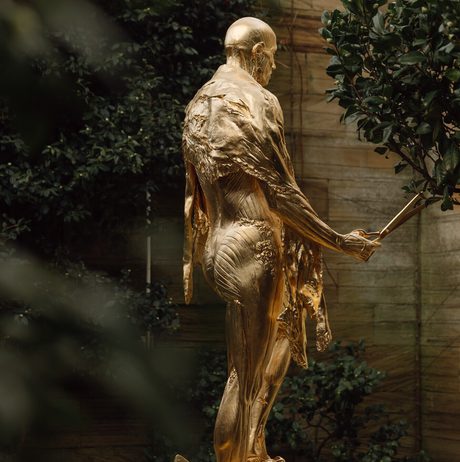
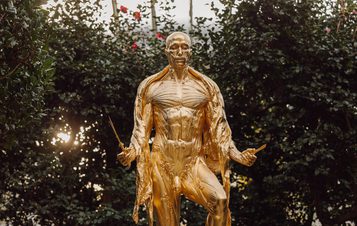
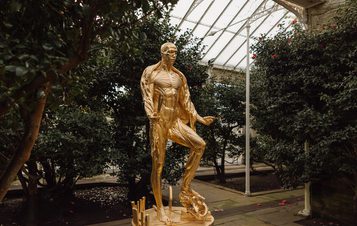
The Martyr – Saint Bartholomew depicts the martyred saint who was one of the Twelve Apostles of Jesus. The figure of Saint Bartholomew and the brutal events of his martyrdom were popular subjects in Christian art history. Depictions of his flayed body allowed artists to demonstrate their mastery of human anatomy.
Visitors are invited to look through the windows of the Camellia House to see the sculpture revealed within, creating an unexpected encounter with the work.
His interpretation creates a commanding presence. It is inspired by the 16th century statue by Italian sculptor Marco d’Agrate displayed at the Duomo di Milano, where the saint’s skin is draped around his shoulders. In Hirst’s version he holds scissors and a scalpel to suggest that his torture is self-inflicted. He also references the film character Edward Scissorhands, who he says was “in a similarly tragic and difficult position”.
Hirst’s inspiration for the work also comes from “memories I have of woodcuts and etchings I remember seeing when I was younger”. He grew up in a Catholic household and was deeply influenced by the religious imagery around him. He even sketched corpses at a mortuary to help him overcome his fear of death. These early experiences shaped the development of the artist’s visual language, which challenges the boundaries between art, science and religion.
Damien Hirst (b.1965) grew up in Leeds and studied at Leeds College of Art and Goldsmiths University, London. Recognised as a leading artist of his generation, he works across installation, sculpture, painting, and drawing. He has exhibited internationally and his work is held in many public collections, including the British Museum, Tate and the Museum of Modern Art, New York. He was awarded the Turner Prize in 1995. Three large bronze works by Hirst - The Virgin Mother, Charity and The Hat Makes The Man are currently on display in YSP’s Country Park, near The Weston.
© Damien Hirst and Science Ltd. All rights reserved, DACS 2025.
More from Damien Hirst
- Art Outdoors
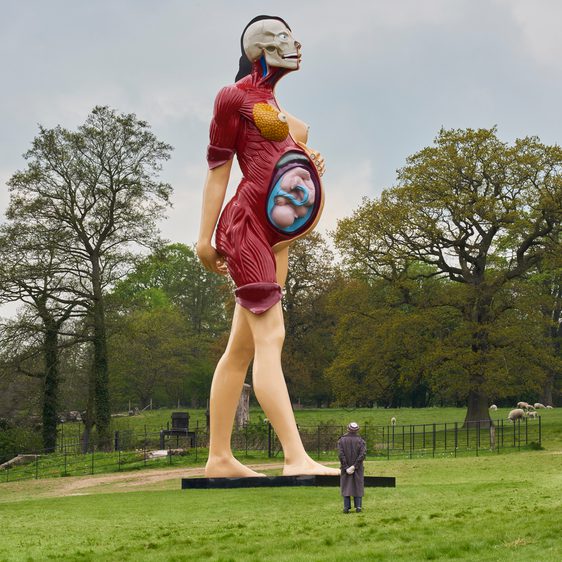
Damien Hirst: The Virgin Mother
Damien Hirst's The Virgin Mother stands at 10 metres tall and is the tallest sculpture at YSP. - Art Outdoors
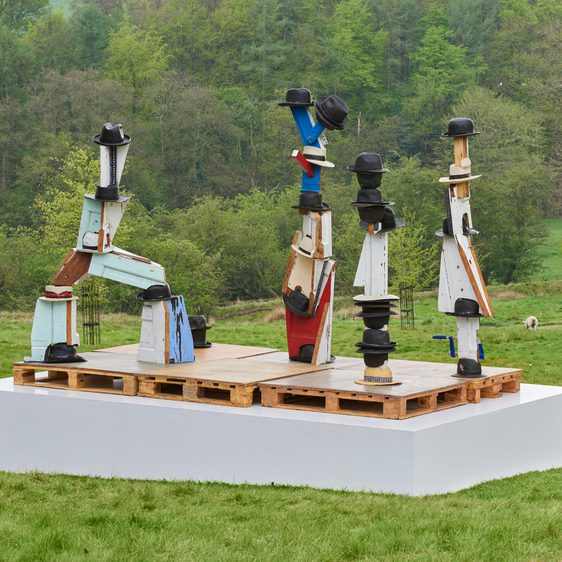
Damien Hirst: The Hat Makes the Man
The Hat Makes the Man is based on a 1920 collage of the same name by the Surrealist artist Max Ernst. Hirst has made a sculpture version with bronze casts of wooden pallets, like a sculptural collage. - Art Outdoors
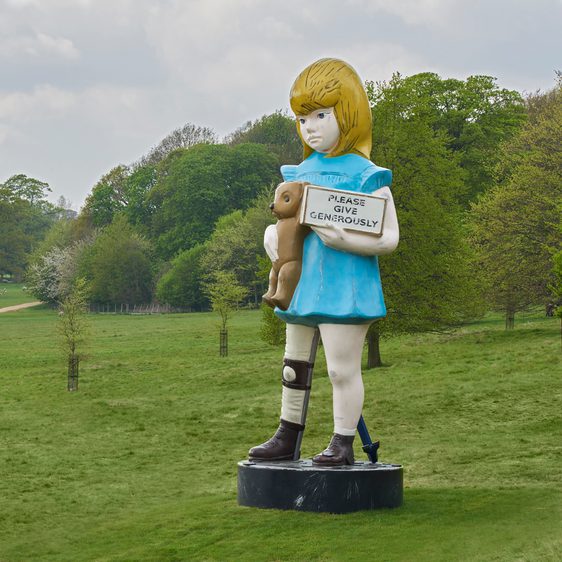
Damien Hirst: Charity
Charity is based on the Scope charity collection boxes that used to be common on British streets. On the walking route to The Weston, it features a young girl wearing a calliper and cradling a teddy bear.