Press Story
Yorkshire Sculpture Park (YSP) presents Time’s Scythe, a site-responsive installation by British artist Nicola Turner that breathes beguiling new life into the 18th-century Chapel. The powerful sculptural presence made from wool and horsehair begins outdoors on the building’s facade, spilling from the bell tower and entering through an upper window, before cascading over the balcony to inhabit the nave.
Visitors will be able to walk amongst its sinuous forms, with the earthy smell of wool heightening its sensory impact. Additional layers of meaning resound in this location as a flock of sheep grazes the landscape surrounding the Chapel. Turner’s work grows out of the interplay between materials and the body, considering ideas around skin, the dissolution of boundaries, cycles of life and death, and the relationship between the human and non-human. She is fascinated by how objects hold memory and investigates our deep-rooted and often unconscious connections to our environment. The artist’s works provoke visceral responses and walk a line between attraction and repulsion, familiarity and strangeness. This is Turner’s first installation at such significant scale to use pale wool and creates a different energy to her dark sculptures, moving away from their heavier, more melancholic character.
Encased in mesh, individual tendrils of raw wool and horsehair are entangled and stitched together to create the work’s bulbous masses. There is something primal about the seeping movement of these bodily forms through the space. Turner describes the organic material she uses as “dead matter” that holds an inherent, latent energy. This stems both from its original connection to the animal and, in the case of horsehair, to its previous use. She sources hair from old upholstery filling and mattresses that have existed in close contact with generations of bodies as part of people’s everyday domestic and intimate lives; a history she feels passes into and becomes part of the material. This life force is animated through its use in the artist’s work, bringing a palpable sense of vitality, stemming from these tactile associations as much as from its fleshy contours.
Turner’s work often incorporates found historical objects, such as ornate furniture legs, that also represent an imprinted history of accumulated touch and use. Pincer-like at the tips of the tendrils of Time’s Scythe, a multitude of traditional sheep shears reach towards the altar like claws, adding to its anthropomorphic nature. They forge another connection to the sheep at YSP, which have their fleeces shorn during spring in the nearby Shadow Stone Fold by Andy Goldsworthy. The shears also link to local historic traditions of manufacturing and industry, including toolmaking in Sheffield, where many of these examples were produced, and the making of woollen cloth in West Yorkshire.
The title, Time’s Scythe, is drawn from Shakespeare’s Sonnet 12 and forms part of the line “And nothing ‘gainst Time’s scythe can make defence”. The poem refers to the relentless march of time, ageing, decay, and the inevitability of death, all themes that align with Turner’s work. In the context of YSP, the reference to the scythe further relates to rural labour and working the earth by hand. Turner is interested in cutting as a metaphor for new beginnings and breaking free of the past. Connecting to this concept is the fact that YSP’s Chapel is dedicated to Saint Bartholomew, who was martyred by being flayed alive and is the patron saint of professions relating to skin and cutting, including leatherwork, tailoring and even farming.
Turner’s practice embeds art history, theory and philosophy, bringing additional layers, depth and resonance. Through extensive reading she explores ideas around bodies, fluid membranes, permeability and exchange, liminal spaces and places of overlap. Pivotal influences are Judith Butler, Julia Kristeva, Jane Bennett’s theories on the “vital materiality” that passes between human and non-human bodies, and Donna Harraway’s theories on “tentacular thinking”. Turner describes how Harraway, “plays with the way that tentacles are ‘feelers’ for how we are enmeshed in the living world”. This sense of touch, responsiveness and haptic understanding is clearly manifest in this compelling new installation.
Nicola Turner says:“Spending time absorbing the energy and stillness of the magnificent Chapel and its surroundings was the starting point for my site-responsive installation Time’s Scythe. My material, which includes locally sourced wool, will pull, weave and grasp through the space with the final form emerging as I work in situ with the YSP team.”
Time’s Scythe is supported by Annely Juda Fine Art. With thanks to Southern & Partners - Artist Management.
Notes to Editors
Press enquiries
Mana Merikhy, Sutton / +44 (0)20 7183 3577 / mana@suttoncomms.com
YSP / +44 (0)1924 832 631 / comms@ysp.org.uk
Download images at ysp.org.uk/press
Listings information
Yorkshire Sculpture Park, West Bretton, Wakefield WF4 4LG
Near Wakefield and Barnsley – M1 Junction 38
+44 (0)1924 832631 | ysp.org.uk | @YSPsculpture
Check online for opening hours.
Book tickets at ysp.org.uk
Social media
Instagram: @YSPsculpture
Facebook: @YorkshireSculpturePark
LinkedIn: Yorkshire Sculpture Park
#YSPSculpture
High-res images
- JPG
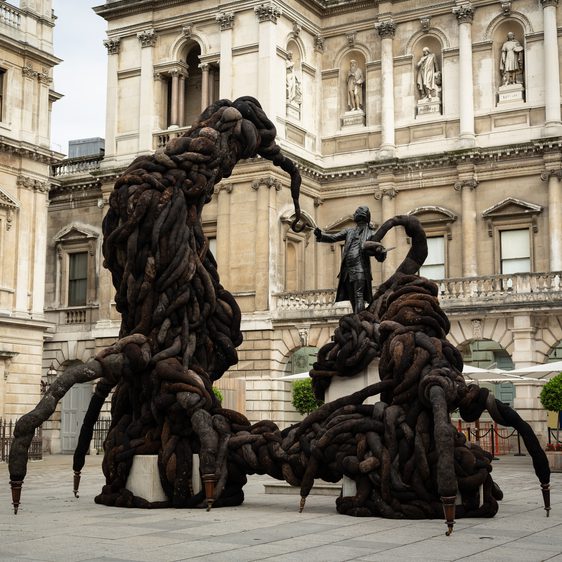
Nicola Turner, The Meddling Fiend, 2024. Photo © Maxwell Attenborough. Courtesy Yorkshire Sculpture Park
2.4 MB - JPG
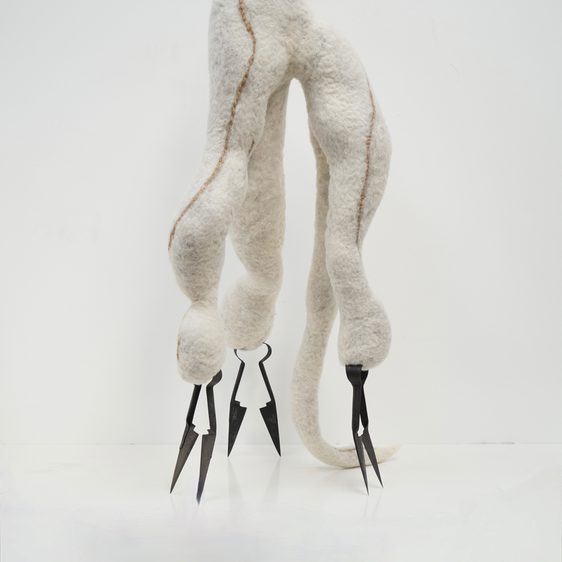
Nicola Turner, Cloud of Unknowing, 2025. Photo © Nicola Turner. Courtesy Yorkshire Sculpture Park
1.7 MB - JPG
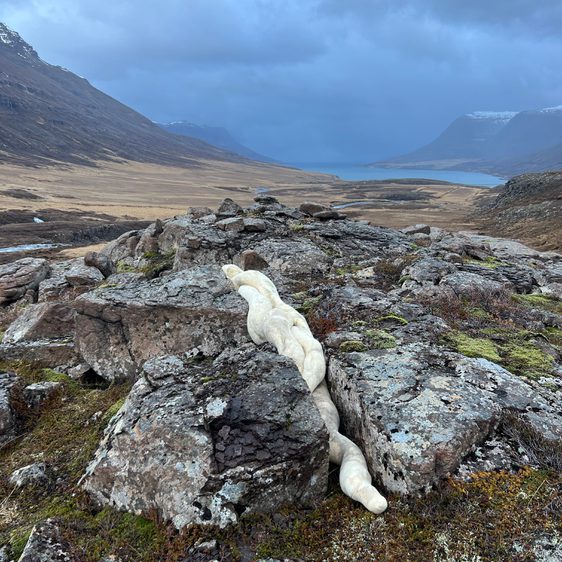
Nicola Turner, Myth and Miasma, 2022. Photo © Nicola Turner
4.3 MB - JPG
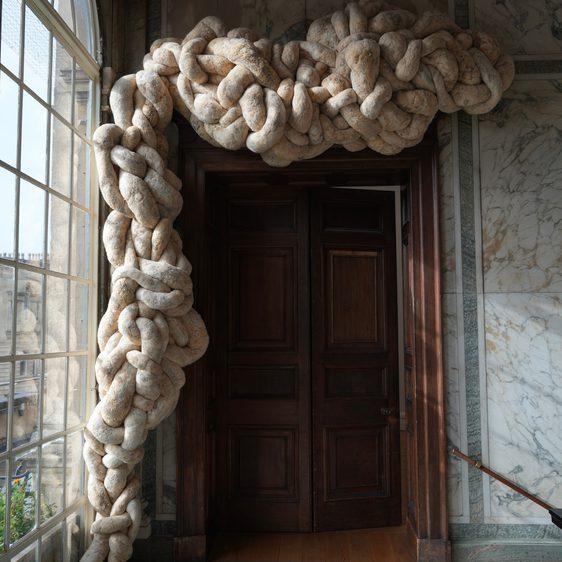
Nicola Turner, Vortex of Summons, Photo © Nicola Turner
6.2 MB