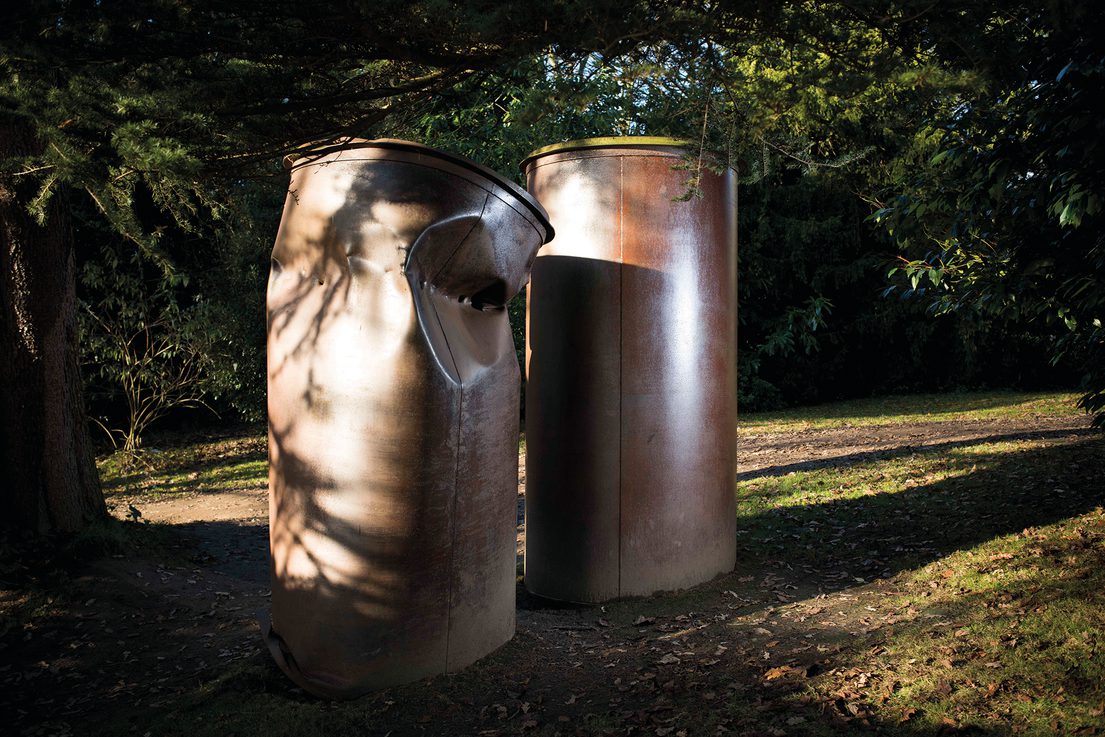
Grenville Davey: Well
Art OutdoorsGrenville Davey: Well
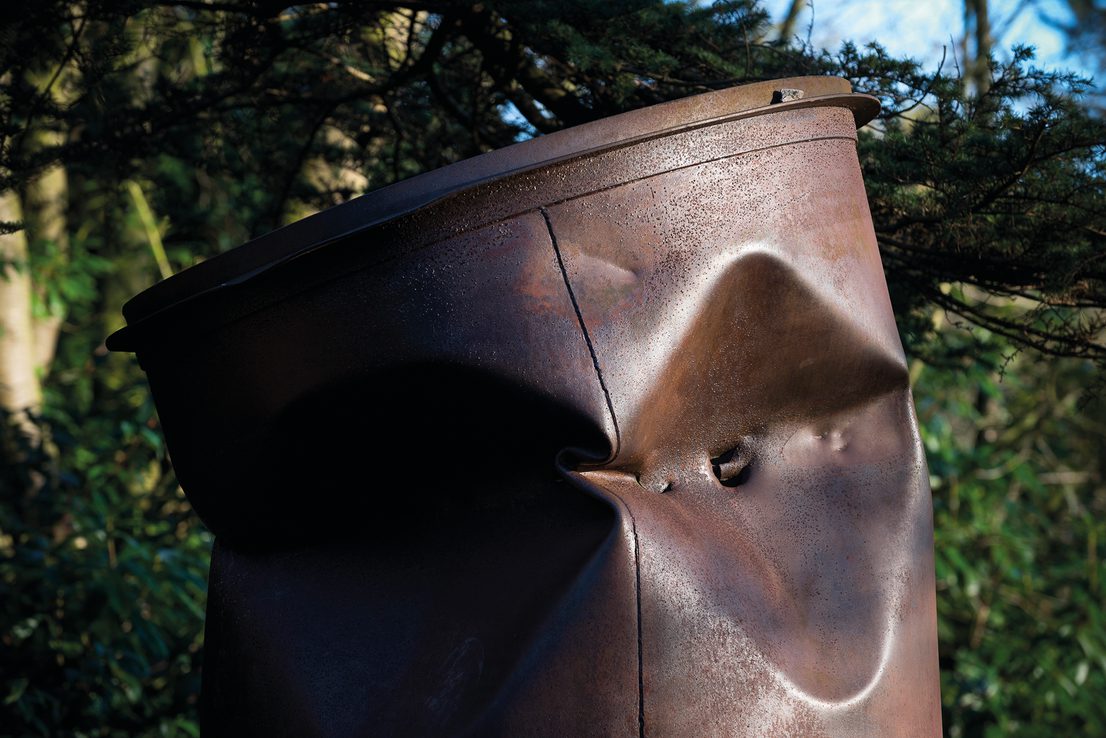
Well is based on the shape of a fizzy drinks can. Everyday, mundane things that have been dramatically scaled up to many times their original size, the cans feel at once familiar and unusual. This is emphasised by the fact that the expected colourful visual branding normally paired with the form isn’t present. In other respects the cans echo the objects on which they were based, and the way they have been crushed was carefully choreographed to make it appear that hard steel has been squashed in the same way that a thin aluminium drinks can would be, before being cast aside.
Pairs of related items, as in these two can forms, often feature in Davey’s work, exploring similarity and difference. Well was made the year after the artist won the Turner Prize.
You might also like
- Art Outdoors
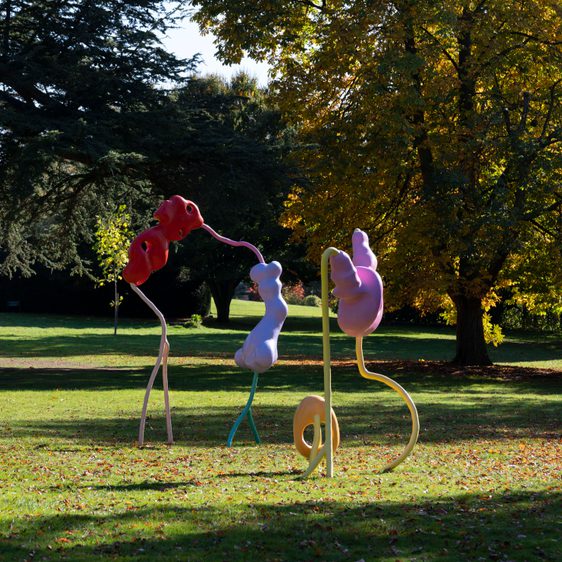
Vanessa da Silva: Muamba Grove #3 and #4
Vanessa da Silva’s work includes sculpture, installation and performance focusing on issues of immigration, notions of territory, identity and displacement. - Art Outdoors
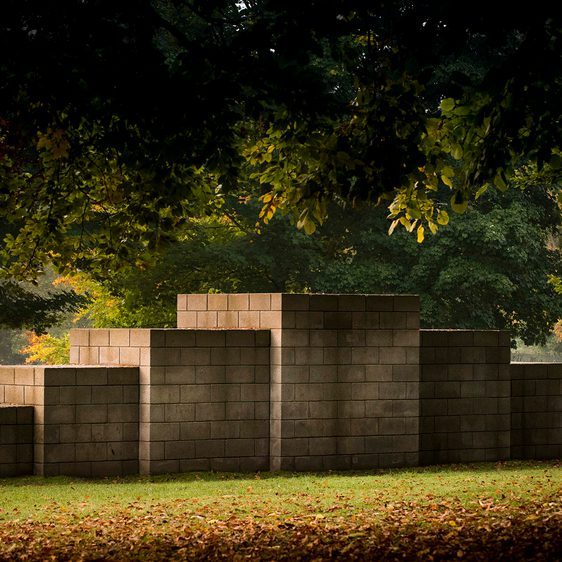
Sol LeWitt: 123454321
123454321 expresses LeWitt’s approach to minimalist composition. It is a construction of cinder blocks set in a formal arrangement. Each series of blocks is in the proportion 1:1:2. This ratio forms the sequence for the whole structure and is typical of his use of simple numerical systems and serial progressions. The work has a restrained and calculated beauty, which stems from the purity of mathematical principles. - Art Outdoors

Sophie Ryder: Sitting
Animals are at the heart of Sophie Ryder’s art practice and her life. Her enduring character known as the Lady Hare combines a female body with the head of a hare, a mystical creature in folklore. - Art Outdoors
Anthony Caro: Dream City